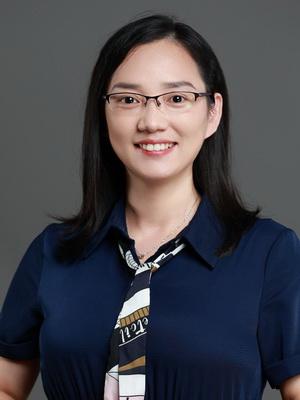
于浙江大学获药学学士学位和药物分析学博士学位,博士期间获国家留学基金委资助赴美国匹兹堡大学联合培养。毕业后于新加坡国立大学从事博士后研究,2015年起任香港浸会大学研究助理教授,2020年以“百人计划”引进至中山大学,并入选深圳市“鹏城孔雀计划”。长期从事质谱分析与代谢组学研究,主要聚焦于质谱分析新方法与智能解析、临床代谢组学及肠道菌群代谢调控机制。先后主持国家自然科学基金、香港研究资助局优配研究金(GRF)、广东省自然科学基金、深圳市科创委基础研究项目及企业横向课题等科研项目十余项。以第一作者或通讯作者在Gut Microbes等期刊发表SCI论文40余篇。现任中国医药生物技术协会药物分析技术分会委员,中国药理学会分析药理学青年委员会委员,广东省药学会生物医药分析专业委员会委员及深圳市医学会微生态专业委员会青年委员。
电子邮箱
hongyj7@mail.sysu.edu.cn
学科专业
药物分析学
个人经历
教育经历
· 2006 – 2011,浙江大学,药学院,药物分析学博士(导师:曾苏教授)
· 2007 – 2008,匹兹堡大学,博士联合培养(合作导师:解向群教授)
· 2002 – 2006,浙江大学,药学院,药学学士
工作经历
· 2020 –至今,中山大学,药学院(深圳校区),副教授
· 2015 – 2020,香港浸会大学,环境与生物分析国家重点实验室,研究助理教授(实验室主任:蔡宗苇教授)
· 2012 – 2015,新加坡国立大学,药学院,博士后(合作导师:Prof. Eric Chan Chun Yong)
科研项目
- 2026 – 2028,广东省自然科学基金-面上项目,2026A1515010720,主持
- 2025 – 2026,企业横向,“代谢组学技术开发”,HT-99982025-0140,主持
- 2023 – 2025,广东省自然科学基金-面上项目,2023A1515012418,主持
- 2022 – 2025,香港研究资助局协作研究金(CRF),C2011-21GF,Co-PI
- 2019 – 2024,国家重点研发计划,2018YFA0901100,课题骨干
- 2018 – 2020,国家自然科学基金青年基金,21707112,主持
- 2017 – 2017,国家自然科学基金应急管理项目,21645010,主持
- 2020 – 2022,香港研究资助局优配研究金(GRF),12303919,主持
- 2018 – 2020,香港研究资助局优配研究金(GRF),12302317,主持
- 2017 – 2018,深圳市科创委基础研究项目,JCYJ20160531193901593,主持
- 2022– 2023,中山大学高校基本科研业务费,22qntd4601,主持
代表论著
- Chen Y, Du H, Zhou W, Qin M, Li M, Jin Y, Xu Y, Ma C, Xia J, Mo Y, Chen N, Huang H, Li H, Xie Z*, Wang P*, Hong Y*. Tamoxifen induced hepatotoxicity via gut microbiota-mediated hyodeoxycholic acid depletion and Farnesoid X receptor signaling disruption. Gut Microbes. 2026, 18(1):2610077. (IF=15.3)
- Zhang Y, Zhang Q, Luo Y, Li X, Zhao R, Xu Y, Zhang S, Bai X, Chen H, Li H, Hong Y*, Xie Z*. Bifidobacterium breve inhibits colorectal cancer via extracellular vesicles containing formate acetyltransferase. Journal of Nanobiotechnology. 2026, 24(1):267. (IF=15.0)
- Ye Q, Xing W, Hu X, Liu W, Wu J, Huang H, Xiao Y*, Hong Y*. Preclinical Pharmacokinetics, ADME, and Drug-Drug Interaction Evaluation of S024, a Novel p38/MK2 Inhibitor for Rheumatoid Arthritis. Drug Design, Development and Therapy. 2026, 20:591017.
- Xu Y, Mo Y, Zhou W, Qin M, Li M, Yin G, Yu H, Chen Y, Du H, Jin Y, Huang H, Ma C, Xia J, Li H, Xie Z*, Wang P*, Hong Y*. Sorafenib induces intestinal toxicity by disturbing gut microbiota and activating the LPS/TLR4/NF-κB signaling pathway in mice. Toxicology. 2025, 517:154220.
- Xu Y, Du H, Chen Y, Ma C, Zhang Q, Li H, Xie Z*, Hong Y*. Targeting the gut microbiota to alleviate chemotherapy-induced toxicity in cancer. Critical Reviews in Microbiology. 2024, 50(5):564-580.
- Jiang L, Hong Y*, Xiao P, Wang X, Zhang J, Liu E, Li H, Cai Z*. The Role of Fecal Microbiota in Liver Toxicity Induced by Perfluorooctane Sulfonate in Male and Female Mice. Environmental Health Perspectives. 2022, 130(6):67009. (IF=10.9)
- Cai Y, Li S, Zhang X, Cao X, Liu D, Zhu Y, Ye S, Xu Z, Liao Q, Hong Y*, Xie Z*. Integrated microbiome-metabolomics analysis reveals the potential therapeutic mechanism of Zuo-Jin-Wan in ulcerative colitis. Phytomedicine. 2022, 98:153914. (IF=11.3)
- Yang Z, Ye S, Xu Z, Su H, Tian X, Han B, Shen B, Liao Q, Xie Z, Hong Y*. Dietary synbiotic ameliorates constipation through the modulation of gut microbiota and its metabolic function. Food Research International. 2021, 147:110569. (IF=8.8)
- Cao G#, Song Z#, Yang, Z, Chen Z, Hong Y*, Cai Z*. Database-assisted global metabolomics profiling of pleural effusion induced by tuberculosis and malignancy.Chinese Chemical Letters. 2021, 32(10): 3207-3210. (IF=9.5)
- Cao G, Song Z, Hong Y*, Yang Z, Song Y, Chen Z, Chen Z, Cai Z*. Large-scale targeted metabolomics method for metabolite profiling of human samples. Analytica Chimica Acta. 2020, 1125:144-151.